Chimney Liners and Relining Services | Absolute Chimney

Chimney Liners & Relining Services

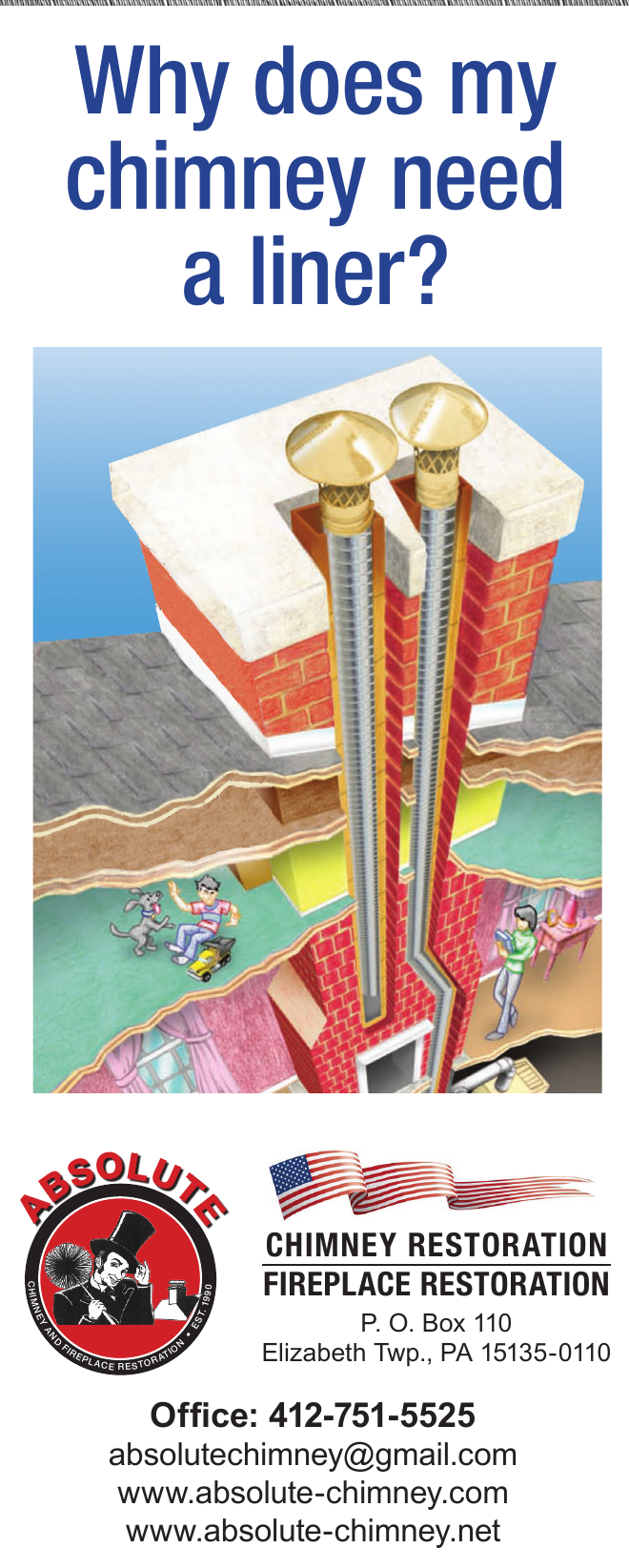
The chimney liner is one of the most important safety parts of the chimney system. It helps contain heat, moisture, creosote, and flue gases so they can be exhausted safely outside the home. If the liner is cracked, deteriorated, missing, or improperly sized, the chimney may no longer be able to do its job safely.

Chimney liner safety

Why Does My Chimney Need a Liner?

The inside of a chimney can look very different from the outside. Acidic moisture, cracked clay tiles, gaps, blockages, and improper flue sizing can create hazardous conditions for fireplaces, wood stoves, furnaces, boilers, and water heaters.

Contain heat, moisture, creosote, and flue gases

A sound liner helps keep combustion byproducts inside the flue until they are exhausted safely outside the home.

Protect against acidic deterioration

Oil, gas, furnace, boiler, and water heater exhaust can create acidic moisture that attacks clay tiles and mortar joints.

Improve draft and appliance performance

A properly sized stainless steel liner can help match the flue to the appliance, supporting steadier draft and safer venting.

NFPA inspection reminder

Chimneys, fireplaces, and vents should be inspected at least once a year for soundness, deposits, and proper clearances. Cleaning, maintenance, and repairs should be completed when needed.

Stainless steel relining

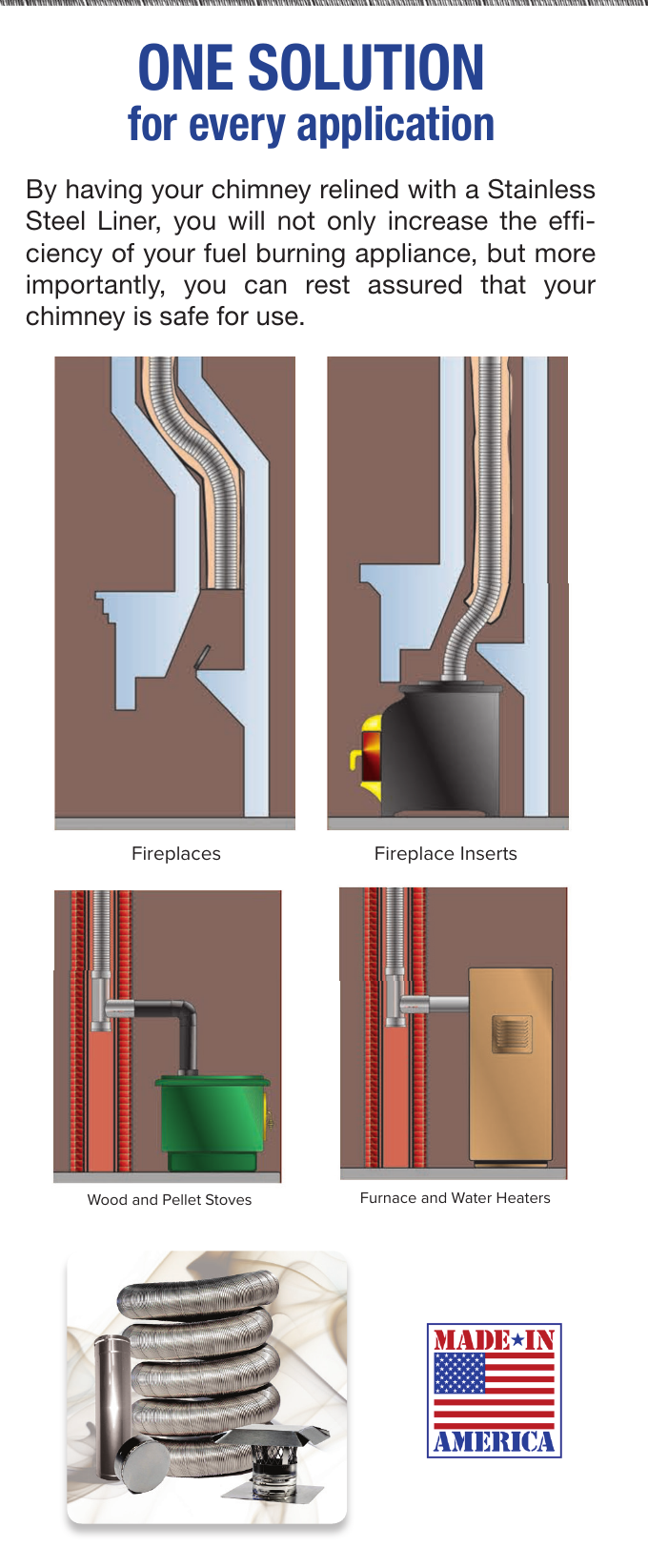
A stainless steel liner can help improve efficiency and, more importantly, restore a safer venting path for the fuel-burning appliance.

Need a chimney liner repair or relining?

Please find more information on the importance of a maintained chimney liner.
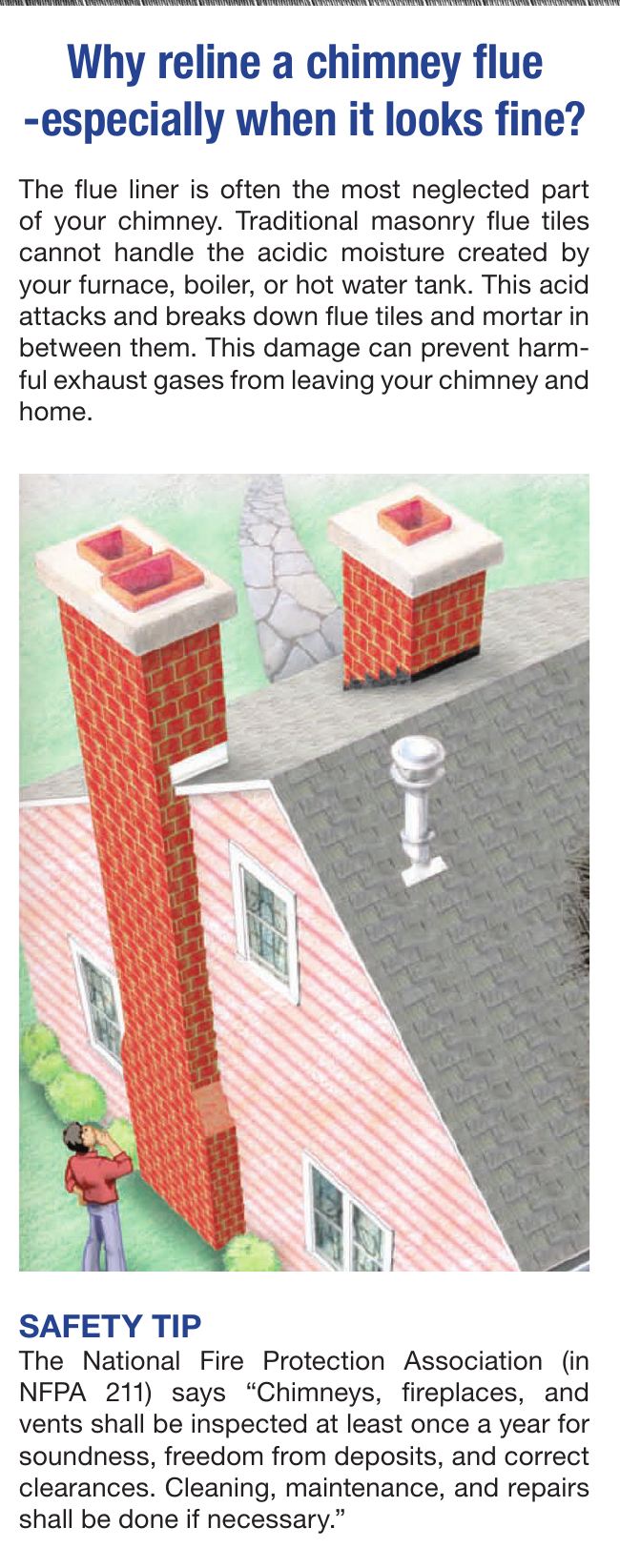
Brochure panel explaining why a chimney flue may need relined
Why reline a chimney flue?
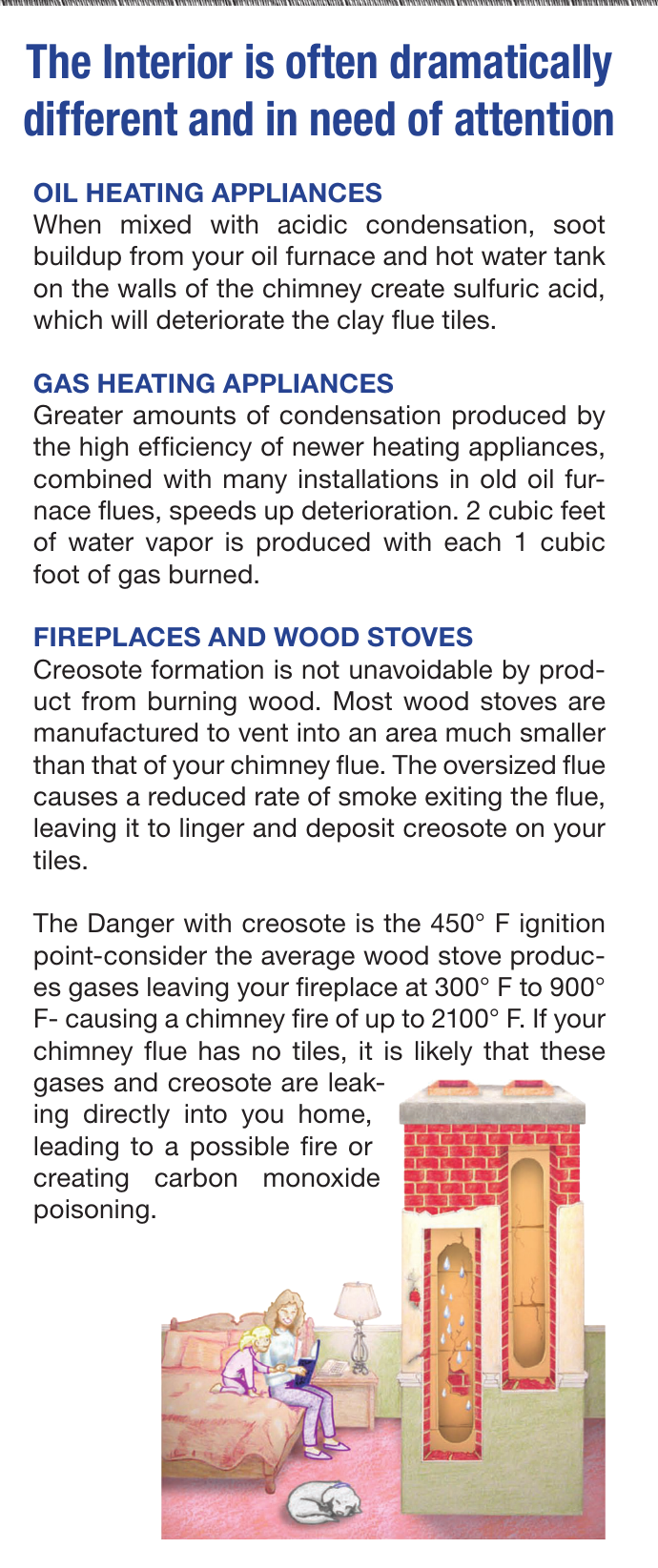
Brochure panel explaining oil, gas, fireplace, and wood stove liner deterioration
Interior flue conditions
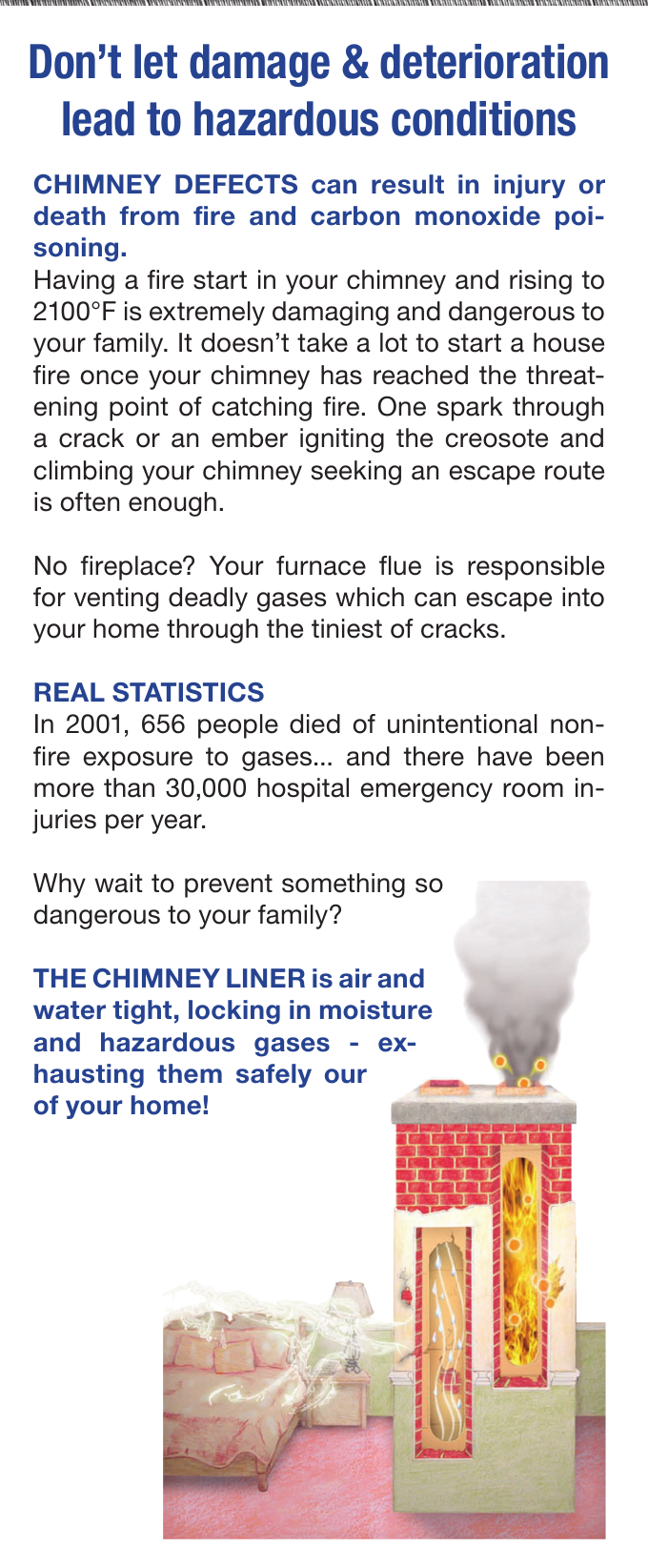
Brochure panel about chimney defects, fire risk, carbon monoxide, and liner safety
Hazardous chimney conditions
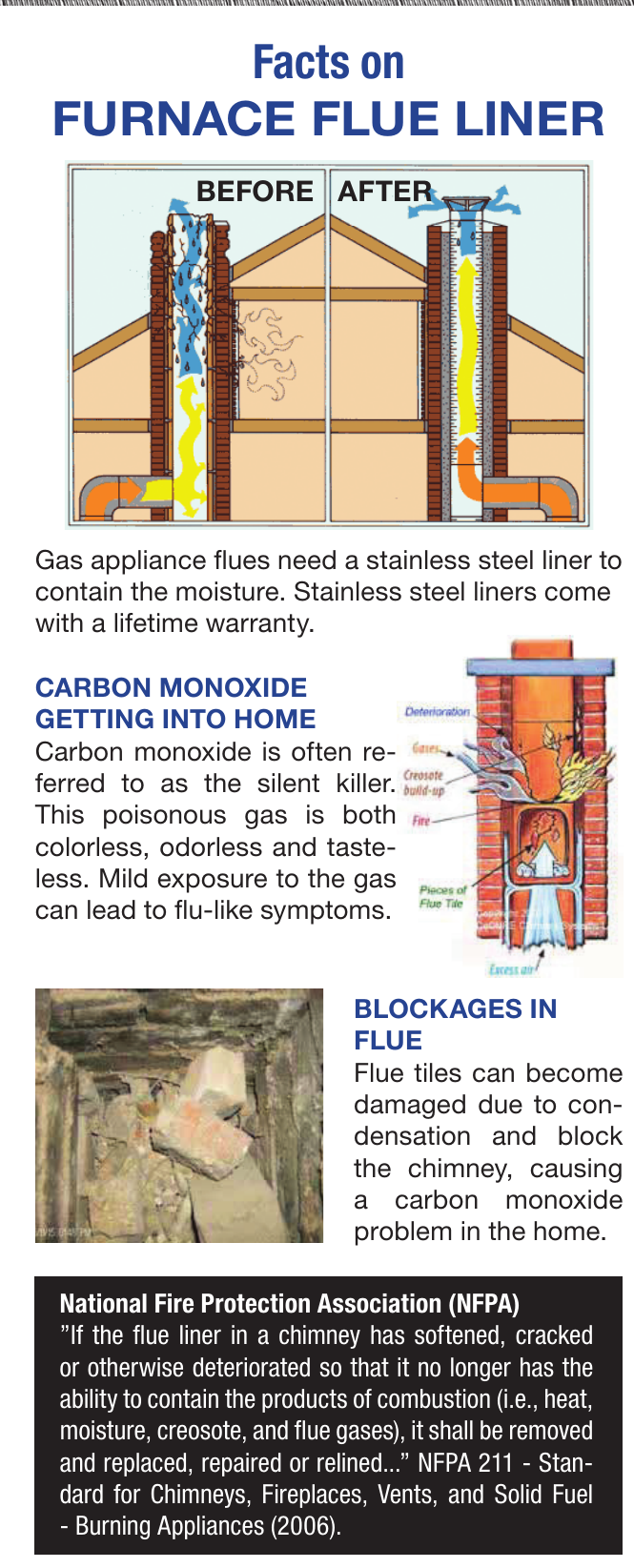
Brochure panel showing furnace flue liner facts, carbon monoxide concerns, and blockages
Furnace flue liner facts
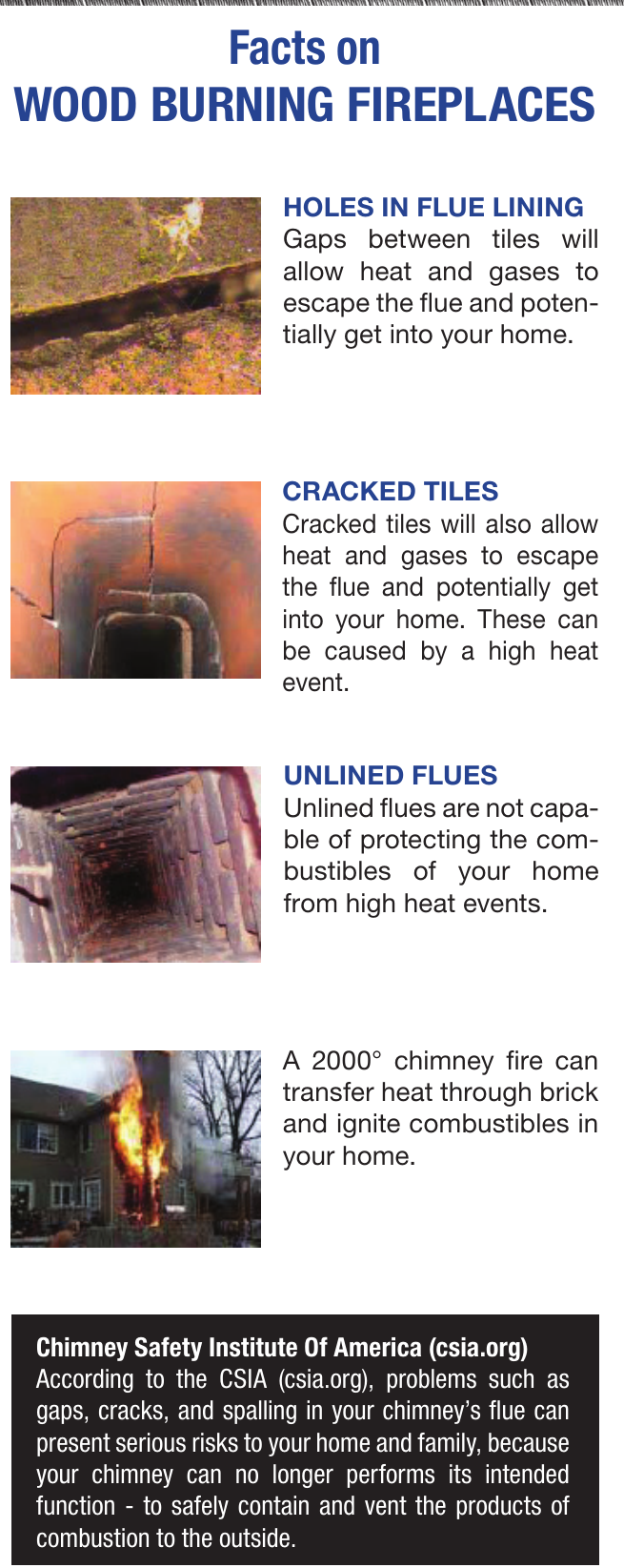
Brochure panel showing holes, cracked tiles, unlined flues, and chimney fire risk
Wood-burning fireplace facts
Brochure panel listing home safety warning signs for chimney liners
Home safety analysis
Brochure panel showing stainless steel liner applications for fireplaces, inserts, stoves, and heaters
One solution for every application
Brochure cover panel asking why a chimney needs a liner
Why does my chimney need a liner?

Pittsburgh chimney liners & relining

The flue liner is often the most neglected part of the chimney because the damage is hidden inside. Traditional clay tiles and mortar joints can break down from acidic moisture, condensation, soot, creosote, and high-heat events. Once a liner is softened, cracked, missing, or otherwise deteriorated, the chimney may need to be repaired or relined.

Why liners matter

A chimney liner helps keep hazardous gases, moisture, heat, and creosote contained until they leave the home. Without a sound liner, these byproducts can escape through cracks, gaps, damaged tiles, or deteriorated masonry.

What can damage a chimney liner?

Oil heating appliances

Soot and acidic condensation can form sulfuric acid on chimney walls, which deteriorates clay flue tiles.

Gas heating appliances

Newer high-efficiency appliances can produce more condensation, especially when installed into older oil furnace flues.

Fireplaces and wood stoves

Oversized flues can slow smoke, encourage creosote deposits, and create unsafe conditions if tiles are cracked or missing.

Facts on wood-burning fireplaces

Wood-burning fireplaces and stoves can expose weak flue systems to smoke, creosote, heat, and chimney-fire temperatures. A proper liner helps contain those hazards and protect nearby combustibles.

Holes in flue lining

Gaps between tiles can allow heat and gases to escape the flue and potentially enter the home.

Cracked tiles

Cracked tiles can also allow heat and gases to escape and may be caused by a high-heat event.

Unlined flues

Unlined flues are not capable of protecting nearby combustibles during high-heat events.

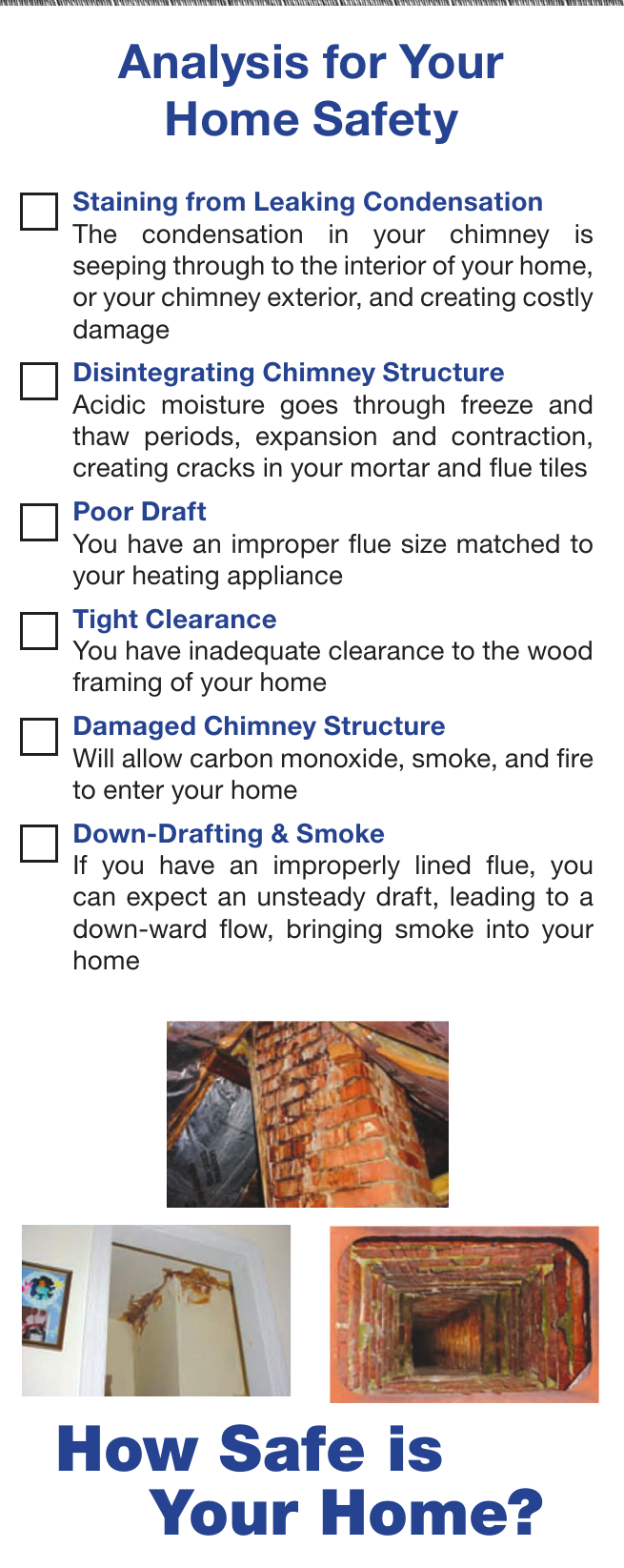
Analysis for your home safety

A liner inspection can help identify hidden issues before they become major hazards or costly repairs. Common warning signs and conditions include:

  • Staining from leaking condensation
  • Disintegrating chimney structure
  • Poor draft from improper flue sizing
  • Tight clearance to nearby wood framing
  • Damaged chimney structure that may allow smoke, fire, or carbon monoxide into the home
  • Down-drafting and smoke caused by an improperly lined flue
Get your liner inspected or relined
We serve Pittsburgh and surrounding communities. Tell us what you are venting - fireplace, furnace, boiler, hot water tank, stove, or insert - and we will recommend the safest path forward.