
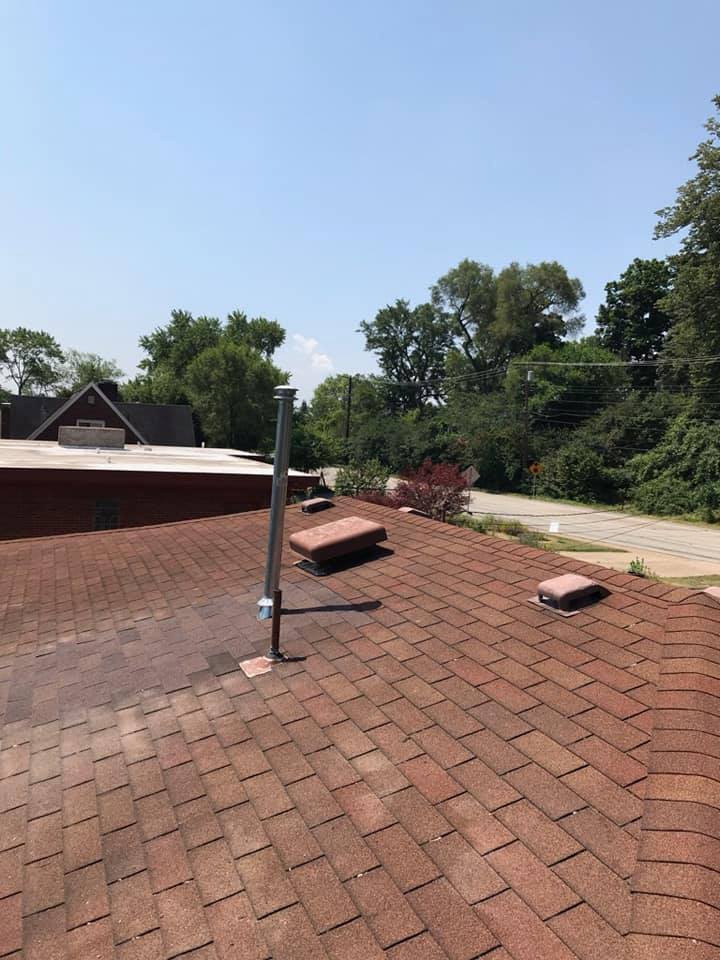
Reduce maintenance costs by replacing a failing masonry chimney stack with a stainless steel chimney system.
Your brick stack is spalling/cracking, the crown is failing, flashing leaks keep coming back, or the flue/structure needs more than spot repairs. We’ll confirm the safest option after an inspection.
Why stainless steel chimneys for renovation?
Less invasive install options
In many cases, stainless systems can be routed with minimal interior disruption (every home is different—an on-site look confirms the best path).
Great for tricky layouts
Stainless systems are easier to retrofit around offsets and challenging building geometries than full masonry rebuilds.
Why stainless steel chimneys for new buildings?
Space-saving
A compact venting option that can fit tighter designs.
Design-forward
Can be a clean architectural feature when planned into the exterior.
Fast installation
Typically quicker to install than full masonry, with simpler long-term upkeep.
Environmentally friendly benefits
Chemical resistance
Suitable for many modern appliances that can produce acidic condensate (especially high-efficiency systems).
Material efficient
Thinner walls can mean less material than some traditional builds (while still meeting safety requirements).
Recyclable
Stainless components are recyclable at end of life and can retain material value.
Valuable safety features
Soot / chimney-fire durability
Stainless systems can be inspected after an event and—if they pass inspection—may be returned to service per manufacturer guidance and local code.
Shock and settlement resistance
Masonry can crack with movement; stainless systems generally tolerate minor settlement and vibration better.
Types of chimney setups
The best configuration depends on your appliance, layout, roofline, and code requirements. Here are the common categories we see:
External chimneys
Outside runs lose heat faster, so insulation and correct sizing are important to keep draft strong and reduce condensation.
Internal chimneys
Interior runs stay warmer and often draft better. A common solution is an insulated system running vertically from appliance to termination.
Single-wall connector pipe
Typically used only for the connector between appliance and chimney system (where allowed). Stainless can also look great in finished spaces.
Twin-wall insulated systems
An insulated flue system that can allow more flexible placement of an appliance while maintaining required clearances.
Triple-wall systems
Some systems use an air channel between the flue and outer wall. The outer wall may be stainless or galvanized, with a stainless inner liner.