Safe, long-lasting repairs—done the right way
Absolute Chimney provides durable chimney and fireplace repairs using proven materials and methods. Our goal is to restore your chimney to safe, reliable operation—not just patch it and hope for the best.
If you’ve experienced a chimney fire, notice water intrusion, smell smoke inside, or the fireplace isn’t venting properly, schedule service as soon as possible.
Common chimney problems we fix
1) Damaged chimney crowns
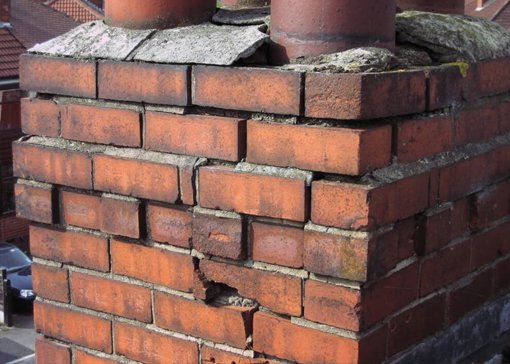
The chimney crown is the protective “cap” at the very top of a masonry chimney. A properly built crown sheds water away from the flue and masonry and includes a drip edge to help prevent water from running down the chimney’s sides.
Many crowns are built with basic mortar mixes that crack and deteriorate over time. A better crown uses a Portland cement-based mix and is formed with a slope and overhang to protect the structure.
2) Deteriorated mortar joints (tuckpointing/repointing)
Mortar joints can fail from weather exposure and from corrosive combustion byproducts. As joints erode, moisture enters, masonry weakens, and heat transfer risks increase—plus flue gases can find pathways into living areas.
3) Flashing repair or replacement
Flashing seals the joint between the roof and the chimney. When flashing fails, water can leak into ceilings/walls and contribute to rot in roof framing. Proper flashing accounts for movement between the chimney and roof so the seal stays watertight through seasonal expansion/contraction.
Smoke chambers in masonry chimneys
What is a smoke chamber?
The smoke chamber funnels smoke and heat from the firebox up into the flue. During a high-heat event (like a chimney fire), temperatures can reach extremely high levels.
Smoke chamber sealing
The smoke chamber should be parged/sealed smooth with refractory mortar to protect nearby combustibles and help improve draft by reducing turbulence and leakage paths.
Why it matters for house fires
Combustible materials can sometimes be present where they shouldn’t be. Heat can transfer through masonry and ignite nearby framing over time—one reason smoke chamber defects are taken seriously.