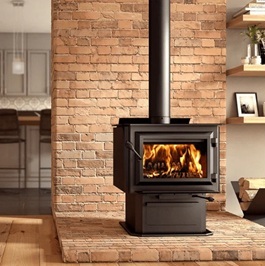
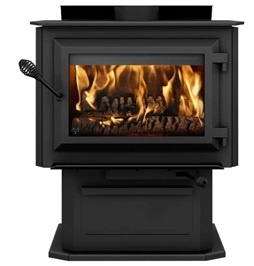
Ventis is one of the most respected names in wood-burning hearth products, with a full lineup of fireplace inserts, freestanding stoves, and zero clearance fireplaces built for lasting performance. Every model is EPA-certified and engineered to meet strict emissions standards without sacrificing heat output. Whether you are retrofitting an existing fireplace with a Ventis wood-burning fireplace insert or planning a new build with a Ventis zero clearance fireplace, the lineup covers a wide range of room sizes, heating needs, and architectural situations while offering the durability, efficiency, and clean design homeowners expect from a modern wood system.
Wood-burning fireplaces can be more than a decorative accent—they can add real heating value to your home.
High-efficiency fireplaces, stoves, and inserts combine modern combustion design with attractive styling. That means better heat output, improved convenience, and (when correctly installed) a safer, cleaner burn than many older systems.
Real heat, not just ambiance
Modern wood-burning stoves and high-efficiency fireplaces are designed to deliver usable heat—not just a nice view.
Cleaner burning
EPA-certified stoves and inserts burn more completely, which reduces smoke and increases efficiency compared to older units.
Lower heating bills with zone heating
A properly sized unit can help heat the rooms you use most, reducing reliance on whole-home heating.
Many modern wood stoves and inserts are designed to burn efficiently and for longer burn times, so you spend less time tending the fire. Some models also offer added convenience features depending on the unit type and installation.
Efficiency and convenience
Properly installed wood stoves and inserts can be very efficient compared with an open masonry fireplace. They’re designed to burn more completely (less waste), producing more usable heat for your home.
Today’s EPA-certified stoves can provide strong heat with fewer emissions—helping reduce smoke and potentially lowering heating costs when used correctly.
Eco-friendly and cost-effective
Wood can be an economical heating fuel, and many modern appliances meet low-emission standards by improving combustion. Burning wood releases carbon that would be released as it decomposes naturally, which is one reason it’s often discussed as a carbon-neutral fuel source (when sourced responsibly).
Whether you’re cost-conscious or comfort-focused, a properly selected wood system can be an investment you’ll enjoy all winter.
Facts on wood-burning fireplaces in masonry chimneys
Your appliance is only part of the equation—the chimney and flue system must safely contain and vent combustion products. Here are common issues we look for:
Holes or gaps in the flue lining
Gaps between tiles can allow heat and combustion gases to escape where they shouldn’t.
Cracked flue tiles
Cracks can occur from high-heat events and can increase risk by allowing heat/gases to reach surrounding materials.
Unlined flues
Unlined flues don’t adequately protect nearby combustibles during high-heat operation or a chimney fire.
Heat transfer danger
A chimney fire can reach very high temperatures, and heat can transfer through masonry to nearby combustibles.
Insulated stainless liner
In many setups, an insulated stainless liner is a key upgrade for performance and safety (and often recommended during installs).